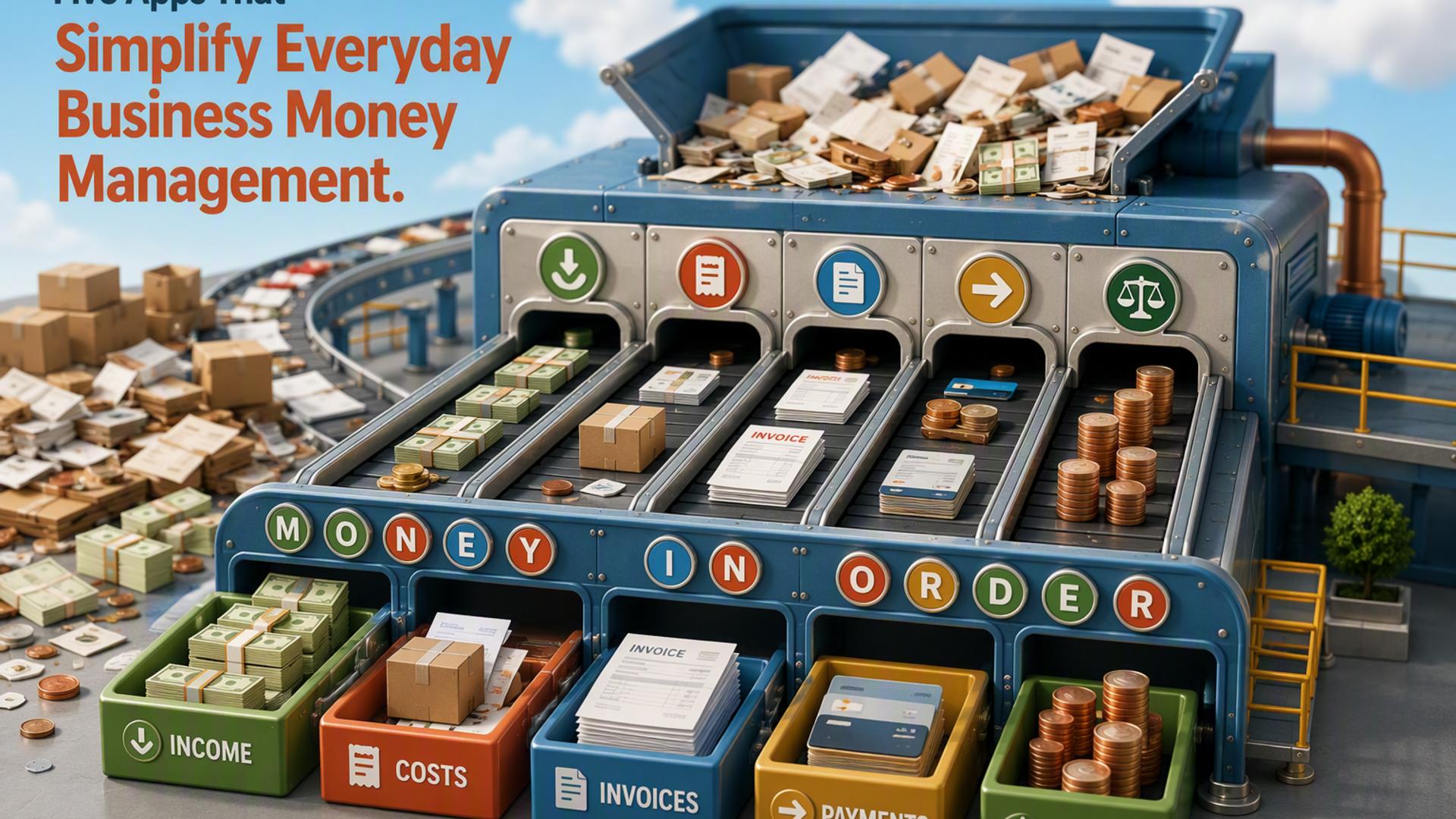
5 Apps That Simplify Everyday Business Money Management
For many small business owners, financial stress is not caused by one major issue. Instead, it builds through recurring day-to-day obstacles: an unpaid invoice, a misplaced receipt, an unexpected bill, or a bank balance that differs from expectations. Each issue may be manageable on its own, but together they can create persistent financial unease.
Business owners who avoid this ongoing pressure are not always more financially skilled. Often, they have incorporated a small group of apps into their routine to address those recurring tasks automatically. These tools keep financial information accurate and up to date without demanding continual hands-on effort. Here is how that approach can work.
1. Sage Accounting: Software for Accounting and Cash Management
Sage Accounting provides the foundation for the rest of the setup. It links with bank accounts to import transactions automatically, monitors payments coming in and going out in real time, handles GST, HST, PST, and QST calculations, and produces cash flow forecasts that indicate the business’s expected financial position in the coming weeks.
Instead of looking at a bank balance and relying on assumptions, Sage offers a clear and accurate picture of current funds and future movement. For Canadian small business owners who no longer want to operate without visibility, access to real-time financial information can make a substantial difference. Plans begin at an accessible price point, grow with the business, and do not require long-term contracts.
Why it matters: Reliable, ongoing visibility into financial activity reduces the uncertainty behind much of the daily pressure involved in small business money management.
2. Pleo: App for Business Spending
Small business owners with even one or two employees making purchases for the company can face continuing financial and administrative pressure from spending that is not tracked. Pleo provides smart business spending cards, collects receipts automatically when purchases are made, categorizes transactions, and sends the information to accounting software in real time.
Each amount spent can be viewed right away, assigned to the appropriate category, and supported by a receipt. There is no need for a month-end expense claim process or manual reconciliation. This creates a complete, current view of business spending without surprises.
Why it matters: Seeing all spending completely and in real time keeps financial records accurate and prevents unexpected costs from emerging at month-end.
3. Relay: App for Business Banking
Clean, low-stress financial management starts with a dedicated business bank account supported by capable digital tools. Available to Canadian businesses, Relay is a business banking platform that lets owners manage multiple accounts from one dashboard. This makes it possible to deliberately separate funds, such as using an operating account for daily expenses, a tax reserve account for GST and income tax as revenue comes in, and a savings buffer for unplanned costs.
With funds organized in this manner and displayed through one straightforward interface connected to accounting software, owners can more confidently determine whether they can pay for an expense or meet an upcoming obligation.
Why it matters: Business banking across organized multiple accounts clarifies the purpose of each dollar and reduces the guesswork that contributes to financial stress.
4. Dext: App for Capturing Receipts
Business receipts accumulate every day, whether they come from a fuel station, supplier, restaurant meeting, or online tool subscription. They represent legitimately deductible money, but only when they are recorded and retained. Dext allows users to photograph receipts immediately with their phone, automatically extracts the information, and sends it to accounting software without manual data entry.
As a result, expense management can take only seconds during the normal course of the day. It replaces a difficult end-of-month batch task, when receipts may be missing, and the details surrounding them may no longer be clear.
Why it matters: Recording expenses at the time they happen supports complete records, maximum deductions, and avoids a month-end effort to rebuild expense information.
5. Plooto: App for Payment Automation
For Canadian small business owners, manually issuing checks, sending e-transfers, pursuing overdue client invoices, and receiving payments can be a frequent source of cash flow pressure. Plooto automates payments in both directions. Through one dashboard, users can pay suppliers and collect customer payments, while reconciliation against accounting records happens automatically.
When clients have an uncomplicated payment link and suppliers receive scheduled payments automatically, cash flow is more predictable. Fewer payments are late or overlooked, and accounting records reflect actual activity rather than assumptions about what occurred.
Why it matters: Consistent, automated payment processing reduces the manual work and uncertainty that can make managing cash flow more stressful than necessary.
Frequently Asked Questions
How can I tell whether my business has a cash flow issue or a profitability issue?
These problems are distinct and call for different actions. A profitability issue occurs when a business does not bring in enough revenue compared with its costs. A cash flow issue arises when the schedule for incoming money does not align with the timing of outgoing money, even where the overall financial position is positive. Many small businesses are profitable yet still encounter cash flow issues, especially if clients pay late or several large expenses arrive at once. Accounting software that shows both profit and loss information and a cash flow forecast at the same time makes the difference easier to identify.
Is linking a business bank account with accounting and payment apps secure?
Established platforms use secure, read-only bank connections through regulated open banking channels or direct integration agreements with banks. These connections do not require users to provide banking login credentials. The app can view and import transaction information, but it cannot move money without explicit authorization. Major financial institutions use the same technology, and it is regarded as safe for routine business use.
How frequently should I check my business finances?
For most small businesses, a brief daily or every-other-day review of the bank balance, unpaid invoices, and alerts from accounting software is enough. A more detailed monthly review of profit and loss, cash flow, and forthcoming major payments helps owners stay informed without taking excessive time. Because cloud accounting software keeps data organized and current, this process takes minutes rather than hours.
How can I prevent an unexpected cash shortage?
Most small business owners can receive enough advance notice by combining a cash flow forecast showing the anticipated position thirty to ninety days ahead, a tax reserve account built up throughout the year, and a clear picture of unpaid invoices and upcoming payments. That warning allows them to act before an actual cash shortfall happens. The important factor is maintaining these systems consistently, rather than reviewing them only when something seems wrong.
What should happen when a client pays late?
Late client payments are among the most frequent sources of small business cash flow difficulties. Strong protection includes establishing clear payment terms in a written agreement or invoice, sending automated reminders before and after the due date, and providing a straightforward way to make payment. When clients receive regular reminders and have an immediate, simple payment option, late payments typically decline significantly without the need for uncomfortable conversations.